Food traceability software, from the farmer's scale to the export certificate.
AGEX OS gives every batch an identity the moment it is weighed, then keeps that identity through processing, packing and dispatch. When a buyer or a regulator asks where a lot came from, the answer takes seconds — not a week of paper.
Five points where identity is usually lost.
Most operations can trace one or two of these. A buyer's audit needs all five.
- 01
At the scale
Every intake records the farmer, the buying point, the weight, the moisture and the grade. The batch number is issued by the system, not written on a bag by hand.
- 02
Through processing
Drying, shelling, grading, extraction and packing consume input batches and create output batches. The link between them is kept, so a finished lot always knows what went into it.
- 03
In the warehouse
Stock moves, transfers and counts are ledger entries. Nothing is edited away — a correction is a reversal plus a new entry, which is what an auditor expects to see.
- 04
On the label
Bags, cartons and pallets carry QR or GS1-128 labels printed from the same record. Scanning one opens the batch, not a spreadsheet row someone typed later.
- 05
At the buyer
Deliveries and invoices carry the batch numbers, and a branded verification page lets your customer check a code themselves without an account.
Where the identity is created, carried and handed over.
One batch number, issued at the scale, still readable on the pallet the buyer receives.
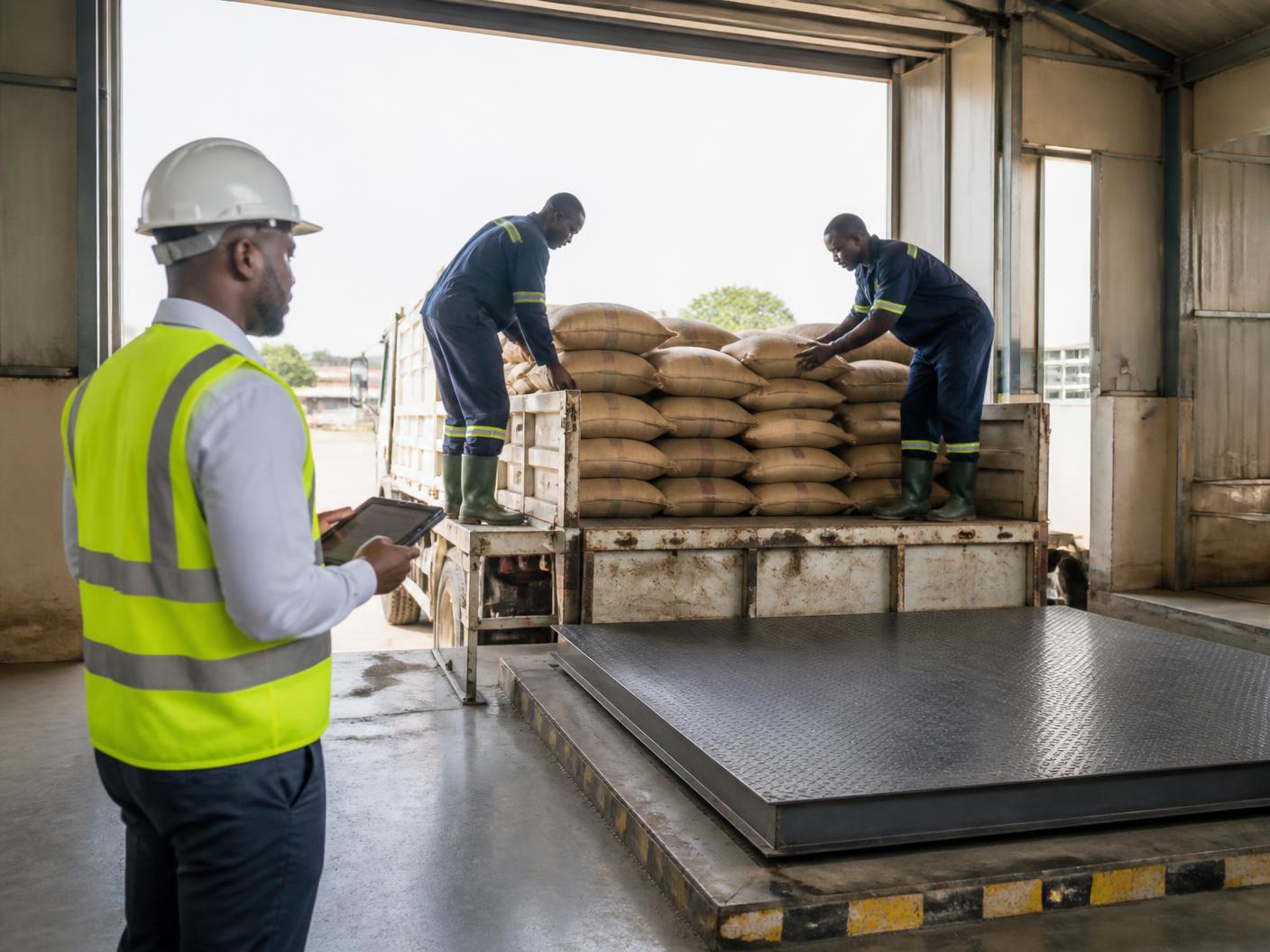
01 At intake: supplier, site, weight, moisture and grade recorded, and the batch number issued by the system.
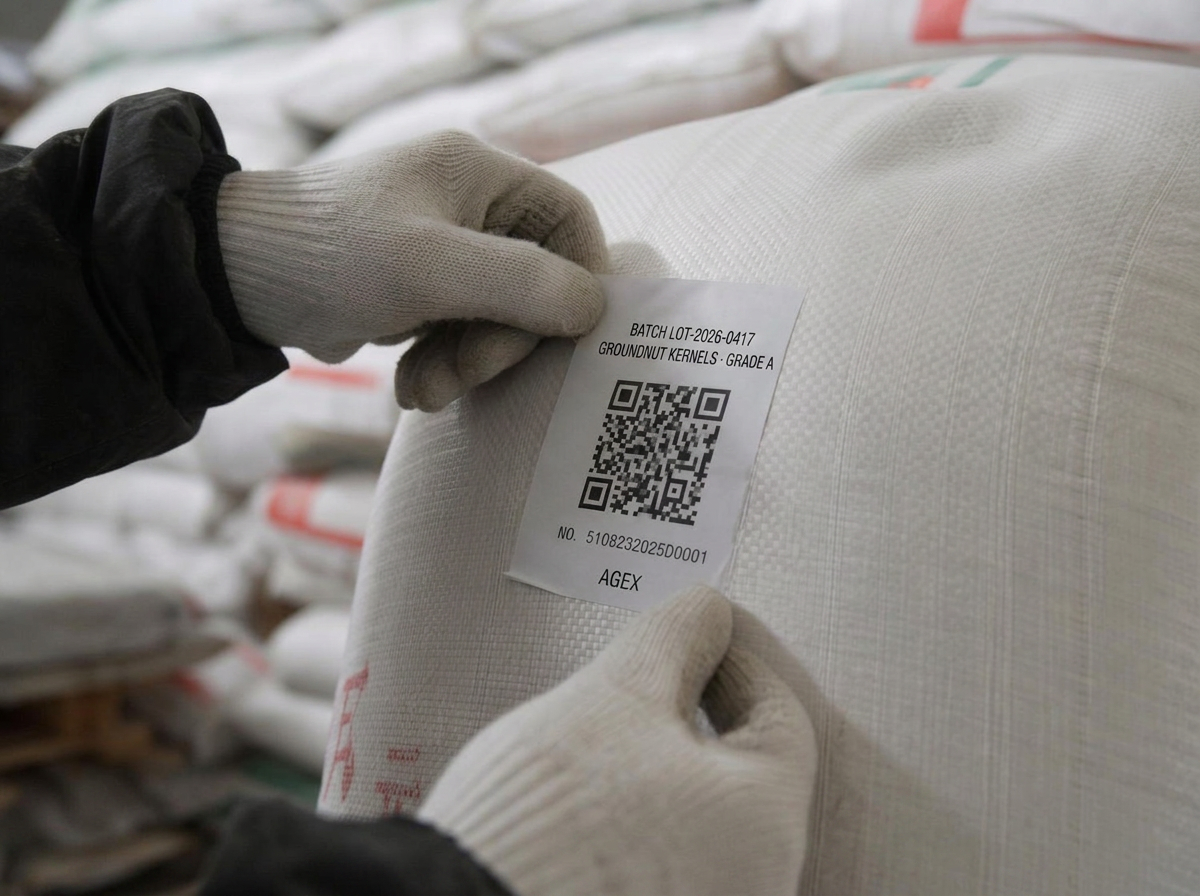
02 In the warehouse: every bag, carton and pallet carries a QR or GS1-128 label printed from that same record.
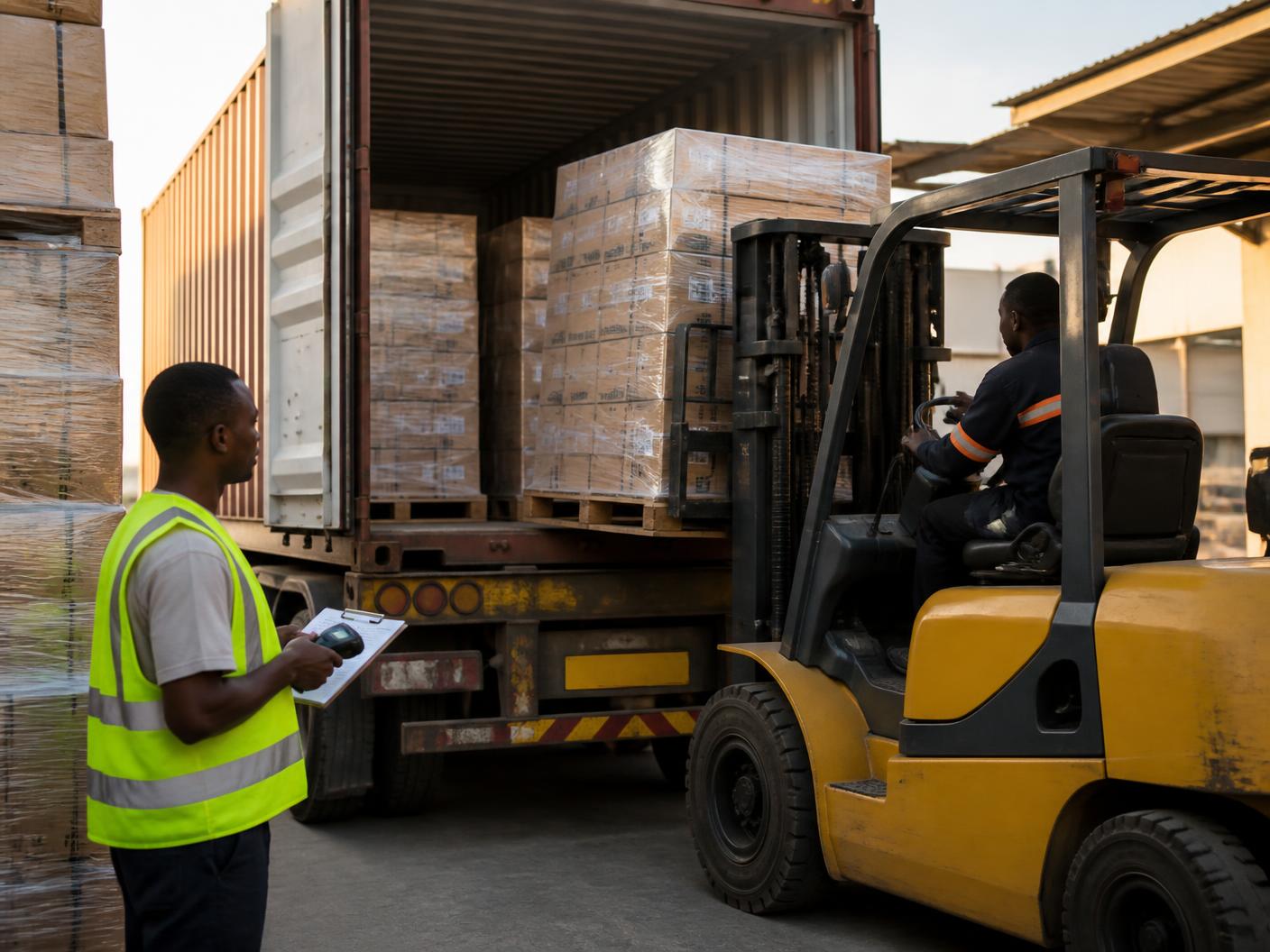
03 At the buyer: the delivery, the invoice and the verification page all quote the same batch numbers.
What a trace actually looks like.
AGEX Foods' lots, resolved the way yours would be — from the finished pallet back to the suppliers who filled it.
Enter a code, or pick one above, to walk a finished lot backwards to the suppliers who filled it.
What you get.
- Backward trace
- From a finished lot to every intake, farmer and buying point that contributed to it, however many processing steps sit in between.
- Forward recall
- From a suspect intake or ingredient to every batch, delivery and customer downstream — the list you need in the first hour of a recall.
- Quality on record
- Moisture, aflatoxin, pH, microbial and any test you define, with pass/fail limits per product and results attached to the batch.
- Export paperwork
- Certificates of origin, phytosanitary and analysis certificates generated from the batches actually shipped.
- Shelf life and expiry
- Production and expiry dates carried on the batch, with alerts before stock ages out.
- Audit trail
- Who recorded what, when, on which device. Submitted documents are immutable; cancellations are reversals.
Asked before every audit.
What is food traceability software?
Software that records the identity and movement of every batch of product — from raw material intake, through processing, to the customer who received it — so any unit can be traced in both directions.
Does it work without a reliable internet connection?
Yes. Intake, weighing and scanning work offline on a tablet and sync when the connection returns, which matters at rural buying points.
Which products does it handle?
Anything you buy, process and sell: nuts, mango and dried fruit, tea and botanicals, sesame and oils, grain, juice and packed beverage.
Can my customers verify a batch themselves?
Yes. Each label carries a code that opens a branded public verification page showing the product, batch and date — no login required.