We are building a system that knows what is happening in your business.
We started at the scale and worked outwards to the books — then taught the whole thing to read itself.
The companies we build for handle physical things. They buy them by weight, change them, store them, and sell them on with a promise about where they came from. The money follows the goods, not the other way round.
Generic ERP asks those companies to describe their season in a language written for somewhere else, and to do it after the fact. So the spreadsheet survives alongside the system, and the two disagree at exactly the moment a buyer, a bank or an auditor asks a question.
AGEX OS is one set of books that begins with the first weight of the day and ends with a closed month — with the equipment posting into it, agents watching it, and an assistant that can answer from it in a sentence. That is what we mean by a smart operating system: intelligence woven through the work, not bolted onto the side of it.
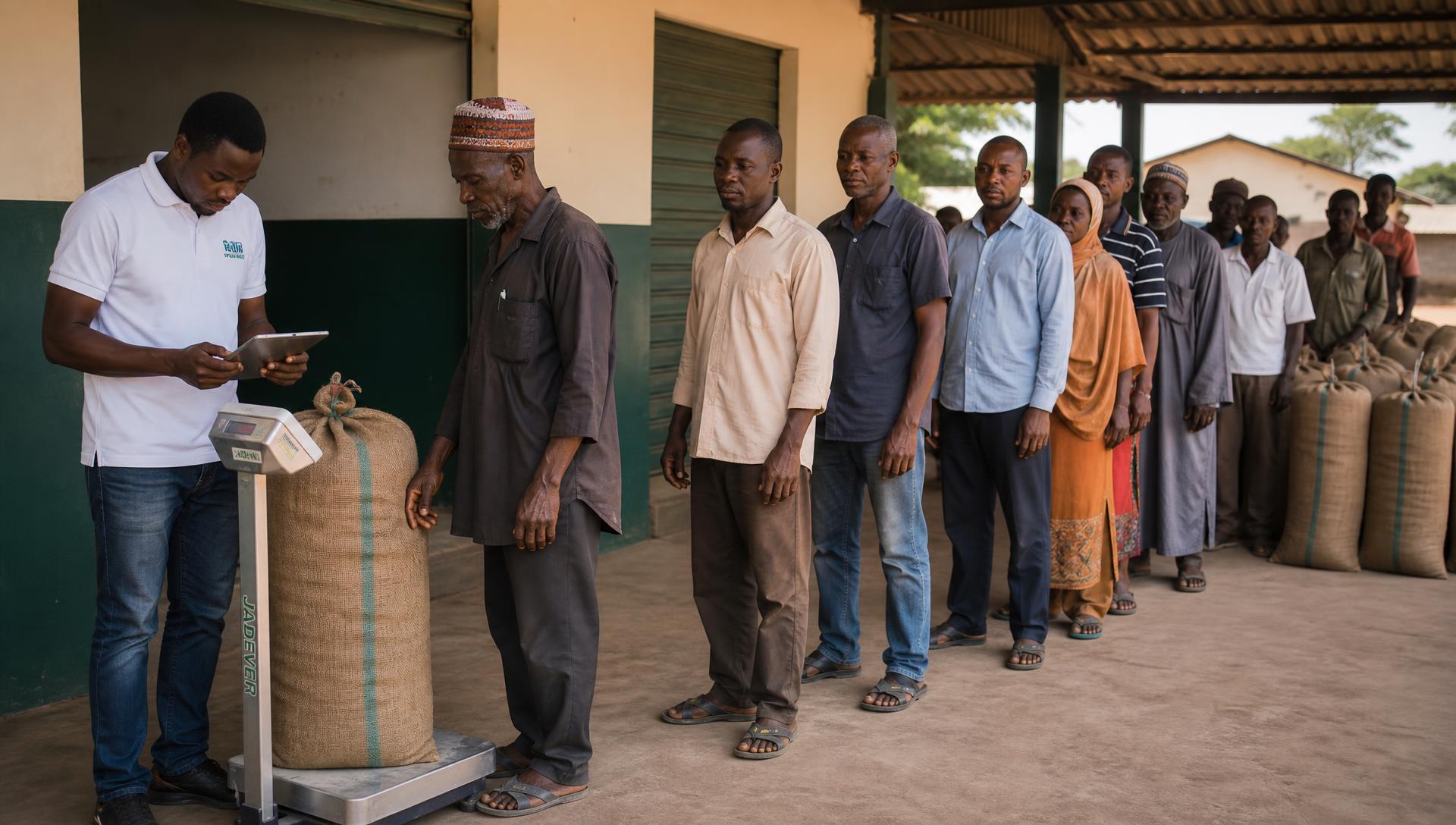
The record is made where the work happens.
If capture is slow, people write on paper and type it in later — and the system becomes a description of the business instead of the business itself.
Intelligence belongs in the work, not in a chat box on the side.
AGEX AI is not a feature you visit. It reads the intake as it lands, the run as it finishes and the invoice as it goes out, and speaks up inside the screen you are already on.
Software should do the reading for you.
Ask a question in plain language and get the number with the rows behind it. Any report becomes a paragraph for a board or a bank. A supplier invoice becomes fields from a photograph.
A system should notice before you do.
Agents watch moisture drift, low outturn, expiry, overdue checks and credit in the background, on a clock. They propose; a person always approves, and the proposal is a record too.
Nobody should type what a machine already knows.
Weighbridges, bench scales, moisture meters and store probes post their own readings, so the number your supplier sees is the number the books keep — and the number the assistant reasons over.
The audit trail is the product.
Submitted documents are immutable, ledger rows are never deleted, corrections are cancel-and-amend. Traceability is computed from those entries, so nothing — human or machine — can author it after the fact.
Five ways of working. One system that sets itself up around yours.
You answer a few questions once, at setup, and the system drafts itself around you — modules, documents, wording and approval ladders — so you don't carry rules that belong to somebody else's business.
- Processors
- Buy raw goods, transform them, sell or export — nuts, fruit, oils, grain, tea, botanicals, minerals.
- Food & beverage manufacturers
- Blend to recipe and pack branded goods, with shelf life, batch codes and bills of materials.
- Cooperatives
- Member-owned unions buying from their members, with registers, advances and payout runs.
- Traders
- Buy and resell without transforming, but still need batch-tracked stock, invoices and books.
- State and public corporations
- Boards running many buying points on public money, with approval thresholds, cash counts and audit obligations.
We'd like to see your operation.
Tell us what you handle, how many sites you run and how your season works, and we'll walk it through AGEX OS with your own numbers.